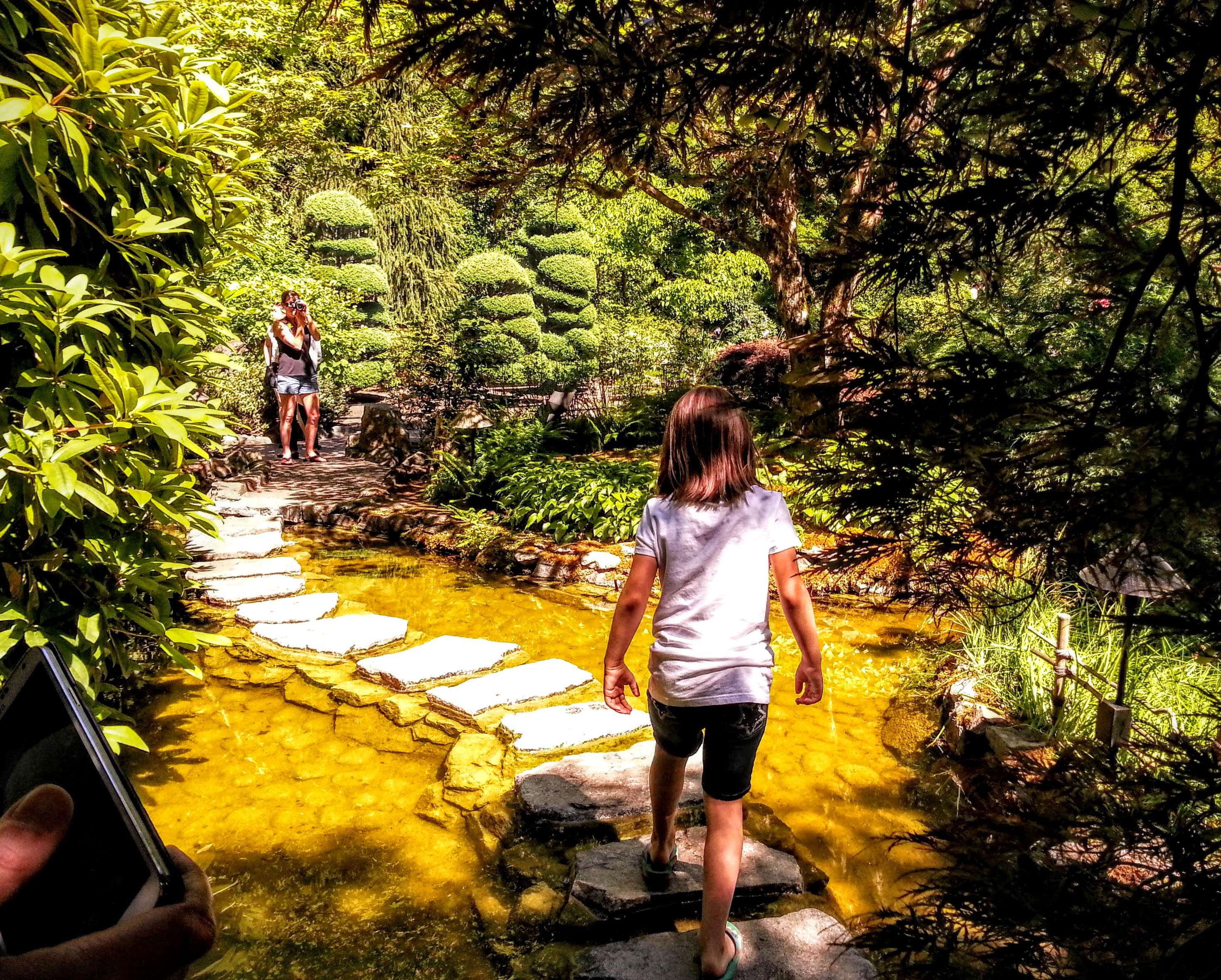
Designing for Succession
A great display garden cannot rely on one moment of peak bloom. At Butchart, designers plan for succession so that early bulbs give way to fresh spring perennials, summer annuals intensify colour, autumn foliage extends visual interest and evergreen structure preserves coherence between flowering cycles.
This approach requires botanical knowledge and disciplined scheduling. Beds are not only attractive collections of plants; they are time-based compositions. Each season inherits from the last and prepares for the next, which is why the garden can welcome repeat visitors throughout the year without feeling static.
Structure Beneath the Flowers
Visitors often remember the seasonal display beds, yet those beds work because a permanent framework holds the landscape together. Trees, hedges, paths, retaining walls, pools and elevation changes provide year-round order. When annual colour is reduced, this underlying structure becomes more visible and proves the site is a designed garden rather than a temporary floral show.
The Sunken Garden especially demonstrates the value of structural design. Vertical faces, lookout points and curved circulation routes give the garden drama in all seasons. Planting then amplifies those forms instead of substituting for them.
Seasonal abundance is most effective when it is anchored by durable form: topography, enclosure, sightlines and evergreen mass.
Labour, Rotation and Horticultural Discipline
Seasonality at Butchart is maintenance-intensive. Plants are lifted, replaced, deadheaded, divided and refreshed on a schedule that most home gardeners never need to attempt at comparable scale. Display quality depends on nursery coordination, greenhouse production and crews that understand both aesthetics and timing.
This hidden labour is part of the garden's cultural value. Visitors see ease; the institution manages complexity. The famous colour palettes and dense bedding effects are possible only because transitions are planned months in advance.
- Spring emphasizes bulbs, cool-season colour and emerging woodland texture.
- Summer heightens annual bedding, roses and immersive floral density.
- Autumn shifts attention to foliage, seedheads, bark and lower-angle light.
Seasonality as Visitor Experience
Seasonal design also shapes memory. A spring visitor and an August visitor encounter the same garden rooms but with different emotional registers, colours and scents. This variability strengthens the garden's public life because it invites return, comparison and anticipation.
Butchart Gardens is therefore best understood as a repeating performance of landscape time. It is not a static picture, but a carefully managed calendar expressed through plants.