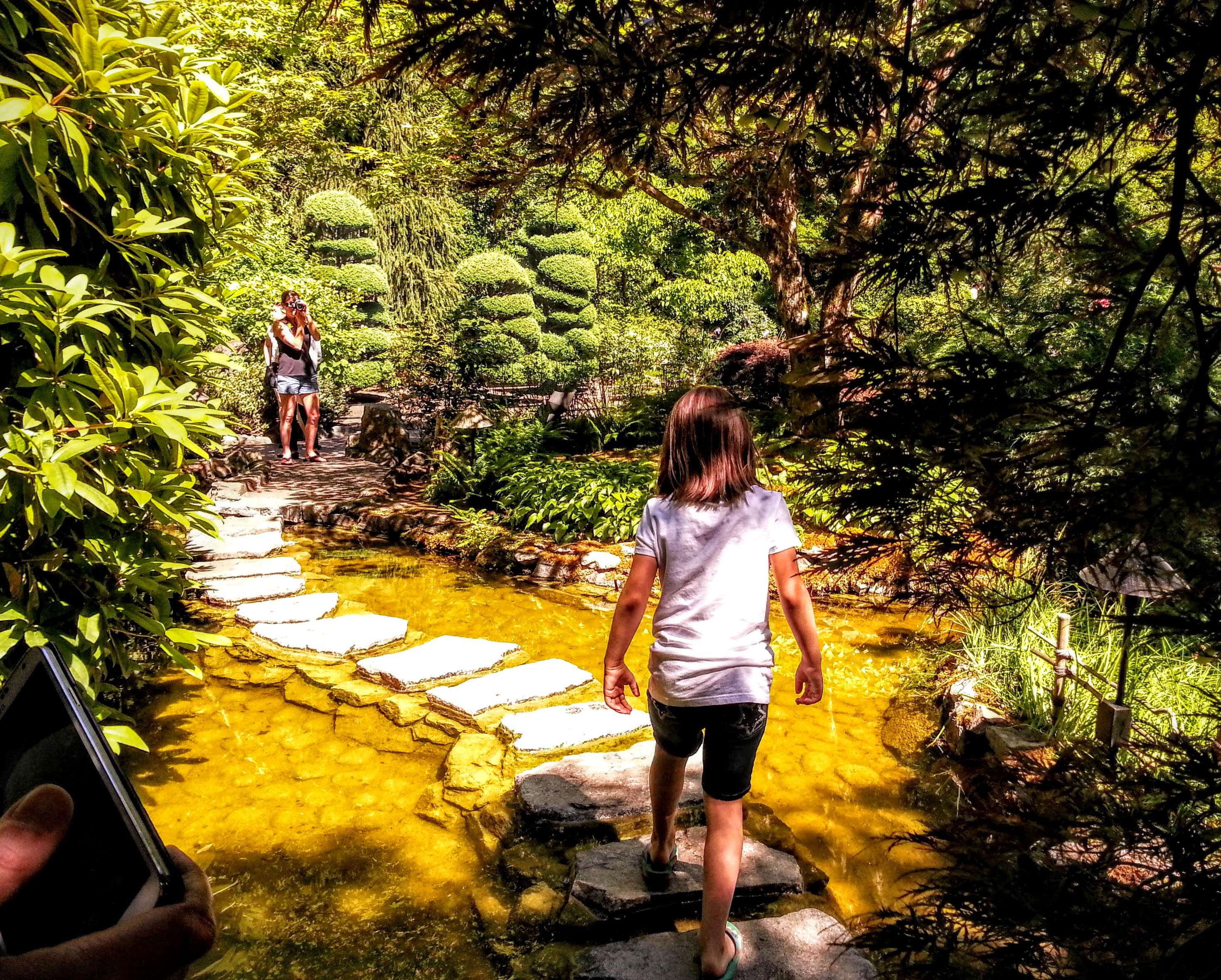
A Style Carried Across the Pacific
Japanese gardens influenced elite landscapes across North America in the late nineteenth and early twentieth centuries. Designers and patrons admired their asymmetry, restraint, use of water, stone placement and choreographed views. At Butchart, this influence became one of several distinct garden languages used to diversify the visitor experience.
The result is not a literal reproduction of a specific Japanese historic garden. It is a translation shaped by local materials, available plant stock and western expectations of what a 'Japanese Garden' should evoke. That makes it historically important as an example of cross-cultural interpretation rather than pure replication.
Why the Pacific Setting Matters
British Columbia's coast has long been part of Pacific networks connecting Canada, the United States and Japan through trade, migration and visual culture. A Japanese-inspired garden on Vancouver Island therefore belongs to a larger regional story of Pacific contact, not just a decorative fashion imported from afar.
Climate also matters. Many plants associated with Japanese-style gardens, including maples, mosses and moisture-loving shrubs, respond well to Victoria's moderate conditions. The garden's atmosphere is reinforced by weather patterns and plant performance, not only by stylistic intention.
The Pacific coast gave North American designers both the cultural channels and the environmental conditions to adapt Japanese garden ideas with unusual conviction.
Key Aesthetic Qualities
Where the Sunken Garden relies on spectacle and vertical drama, the Japanese Garden offers a different rhythm: enclosure, pause, filtered light and the visual quiet created by layered greens, water reflections and controlled framing. Paths invite slower movement and more attentive looking.
This contrast is central to Butchart's overall design intelligence. Different garden rooms supply different emotional registers, allowing the property to feel expansive in cultural meaning as well as physical size.
- Asymmetrical composition softens the formal intensity found elsewhere on the site.
- Water, stone and planting are arranged to create mood as much as display.
- Shade and enclosure encourage contemplation rather than panoramic spectacle.
Interpretation Today
Modern audiences often ask more searching questions about cultural borrowing, naming and authenticity than earlier generations did. That is healthy. It encourages visitors to see the Japanese Garden as a historical artifact of design exchange, admiration and selective translation rather than as a timeless or context-free aesthetic category.
Read in that way, the garden remains powerful: it reveals how Pacific Canada imagined beauty through international influence while still grounding that vision in local climate and long-term horticultural care.